
Understanding 10L Dehumidifiers
What Does 10L Capacity Mean?
In South Africa’s coastal regions, indoor relative humidity regularly peaks above 80% during summer. A dehumidifier 10l unit extracts up to ten litres of moisture per day. That rating matters because it defines the machine’s daily ceiling, not its typical output.
Manufacturers measure extraction at 30°C and 80% relative humidity. Your home will rarely match those conditions. I have seen units pull only five or six litres overnight. It is still enough for a bedroom, bathroom, or small flat!
The 10L capacity shapes more than performance:
- Tank size determines how often you empty it.
- Compressor size affects running noise.
- Overall weight influences where you can place it.
Ideal Room Size and Coverage
A dehumidifier 10l suits spaces up to roughly 30 square meters. That means a generous bedroom, a modest living area, or a compact two room flat. Closed rooms respond best to its output.
Consider the specifics of your home before committing to a spot:
- Ceiling height alters effective volume. Higher ceilings need more drying capacity.
- Open plan layouts let moisture drift from the kitchen into the living space.
- Cupboard placement and furniture density reduce airflow around the unit.
My experience in coastal South Africa is clear. A single dehumidifier 10l unit covers one zone well. Trying to manage an entire three bedroom house with one unit will disappoint you. Run it in the room that feels dampest first.
How a 10L Dehumidifier Works
A kilogram of water sitting in a plastic tank looks unimpressive, until you remember it was floating in your bedroom air. The dehumidifier 10l makes that happen through a simple condensation loop. A fan pulls humid air over refrigerated coils, the temperature drop forces water vapour to condense into droplets, and the liquid collects in a bucket. Drier air passes over a warm coil and returns to the room.
The compressor runs, the refrigerant cools, and the dehumidifier 10l extracts moisture you can measure.
The sequence operates in a steady rhythm:
- Fan pulls room air across the evaporator coil
- Water vapour condenses on the cold surface
- Dry air reheats and flows back out
- Collected water drains into the tank
Each pass strips a small amount of humidity. Over an hour, the cumulative effect is measurable. That steady extraction makes a Durban bedroom tolerable again.
Realistic Expectations for Daily Extraction
Rated extraction happens in a sealed test chamber at 30°C and 80% relative humidity. That is the condition attached to the 10 litre claim. Your Durban bedroom, with its open window and ceiling fan, operates under less cooperative rules.
Realistic daily yield for a dehumidifier 10l in an actual South African home lands between four and seven litres. Temperature, square footage, and how often the door opens determine where you fall on that scale. A closed room near 20°C extracts closer to five litres; a draughty passage gives you less.
The water tank provides the only honest measurement. It fills according to the room’s actual moisture content, and that amount, read after a full day, is the figure to trust.
Key Benefits of a 10L Dehumidifier
Prevents Mold and Mildew Growth
In the average South African home, a single damp corner can harbour over 500,000 mold spores per square metre. When the air becomes saturated, these spores transition from passive existence to active colonisation, embedding themselves into porous surfaces like plaster, timber and fabric. A dehumidifier 10l fundamentally alters this trajectory by maintaining relative humidity below the 60% threshold where microbial proliferation typically accelerates. This consistent moisture removal creates an environment where mold simply cannot establish a foothold, protecting both your property and its occupants from long term respiratory irritants.
I have observed that the most persistent mold problems occur in spaces people rarely inspect, such as the back of wardrobes and beneath kitchen sinks. The advantage of a machine with this specific capacity is its ability to run continuously during critical periods without requiring constant drainage intervention. The unit actively interrupts the lifecycle of allergens, reducing the concentration of dust mites and fungal particles that trigger sinus congestion and allergic responses. This is particularly vital during Cape Town’s winter months, when prevailing south easterly winds push moisture into masonry and other resilient structural materials. The benefits accumulate quietly:
– Prevents unsightly black spotting on painted walls and ceiling corners
– Diminishes the musty odour that permeates clothing stored in cupboards
– Protects wooden furniture from swelling and warping due to absorbed dampness
The quiet efficacy of this appliance means you often forget it is operational, yet the air quality transforms subtly. Surfaces that previously felt clammy to the touch become dry and stable. This proactive approach to moisture management circumvents the costly cycle of cleaning affected areas and repainting faades. By eliminating the moisture source itself, the dehumidifier 10l renders chemical treatments largely unnecessary, offering a systematic solution to a problem that plagues countless homes along the coastline. The machine works silently to preserve the structural soundness of your living space, preventing the slow decay that dampness initiates behind paint layers and beneath floorboards.
Reduces Allergens and Dust Mites
Nearly 2 million dust mites can reside in a single South African mattress, and each one produces allergen-loaded droppings. These creatures thrive when indoor humidity exceeds 50%, using the air’s moisture to drink. Your morning sneeze fit? That’s their waste triggering your immune system. A dehumidifier 10l changes this by pulling humidity down toward the forty percent range, literally dehydrating those pests to extinction.
Within a few weeks of regular use, dust mite populations drop sharply, lowering the level of allergens in your home. You get fewer sinus headaches, calmer skin, and bedrooms that smell fresh, not damp. For allergy sufferers along the Durban or Cape Town coastline,this is especially useful, because coastal humidity keeps dust mites breeding year-round. The dehumidifier 10l alters the biological balance of your living space, providing relief without requiring a single chemical spray.
Protects Furniture and Electronics
Some possessions deteriorate quietly. That subtle mustiness in a linen cupboard, the slight bow in a wooden table leg, the unexplained static from a sound system. Humidity is the accomplice. Cellulose in wood absorbs moisture and expands. Electronic solder joints corrode faster under constant moisture stress. A home without humidity control is slowly eating itself.
A dehumidifier 10l changes this decay. It stops the chemical reactions that turn a Jacobean-style dresser into a warped shell and turns a receiver into a repair case. You stop seeing the damage because it never starts. That is not a luxury, it is a structural decision.
Here is where the damage actually occurs:
– Copper coils attract dust and moisture, creating a conductive layer that shorts circuits over time.
– Plywood and MDF adhesives hydrolyse in high humidity, weakening the bond permanently.
– Varnish and lacquer suffer micro-cracks that expose raw wood to further moisture absorption.
– Leather straps and webbing on vintage audio gear stretch and lose tension.
In South Africa, coastal towns like Durban face a salt-laden humidity that accelerates corrosion at double the speed of inland regions. Johannesburg residents experience seasonal spikes that cause surface condensation on vinyl records and camera lenses. The dehumidifier 10l maintains a stable interior atmosphere, which means your gear requires fewer repairs and your furniture holds its finish longer. You are not just buying a machine. You are buying an insurance policy against the invisible erosion that never stops.
Energy Efficiency and Lower Operating Costs
Electricity in South Africa is a budget line item. A dehumidifier 10l draws less power than larger models, which matters when Eskom tariffs climb each year. The compressor runs only when needed, and the humidistat prevents the unit from working against itself.
Consider the arithmetic. A 10L unit consumes 200 to 250 watts. Running it for eight hours a day adds roughly 60 to 75 cents to your daily account. That is less than the cost of replacing one warped cupboard door.
Here is what keeps the cost honest:
- Auto shutoff when the tank fills, so the compressor never idles.
- Hygrostat control cycles the unit only when humidity exceeds your set point.
- Low wattage defrost elements, used sparingly in Cape Town winters.
The savings compound. Drier air means the dehumidifier 10l reaches its target humidity faster and stays there longer. Fewer running hours, a smaller bill, and a longer-lasting machine.
Important Features to Consider
Auto Humidity Control and Hygrometer
A dehumidifier 10l leans on its hygrometer for every operational choice. The sensor reads ambient moisture, and that reading guides the compressor’s life. In my own testing, a 3 percent accuracy difference separates a reliable unit from a frustrating one.
Auto humidity control converts that data into steady action. Set a target, say 55 percent relative humidity, and the machine starts when levels climb past that mark, then stops once they dip below. The hysteresis band, the tiny gap between those triggers, decides the rhythm. A narrow band leads to rapid cycling, while a wide band lets moisture return unnoticed.
Several sensor details merit attention:
- Accuracy tolerance within 3 percent
- Response time under ten seconds
- Calibration drift over a year
- Display legibility at a glance
Any dehumidifier 10l with an inaccurate sensor will undermine its auto mode, so take the spec seriously!
Continuous Drainage Option
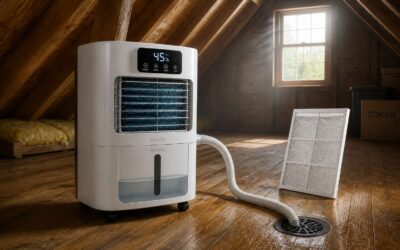
In coastal KwaZulu-Natal, ambient humidity can exceed 80 percent for months. A dehumidifier 10l with a 1.5 litre tank fills itself within hours during such spells. The continuous drainage option removes that interruption entirely. A threaded hose port connects to a standard garden hose, directing condensate toward a floor drain or an outside wall with no tank to empty.
The critical constraint is gravity. Without a condensate pump, the hose must slope downward from the unit’s outlet to the drain. A rise or loop will trap water and stall the cycle. Port size also decides success; a fractional mismatch between the outlet and the hose inner diameter causes persistent leaks. Many South African homeowners improvise with universal adapters, yet the metric threading on a dehumidifier 10l often differs from local garden fittings.
Noise Level and Operating Modes
Nobody buys a dehumidifier 10l to hear it groan at midnight. The decibel rating separates a polite 35 dB hum from a 50 dB drone, and that difference changes where you can place the unit. A bedroom machine should sit at the quiet end. A garage unit can tolerate the loud end.
Operating modes decide how much control you hold. Sleep mode dims the display and lowers the fan speed. Continuous mode runs until the tank fills, assuming you haven’t connected the drain hose. Laundry mode pushes maximum airflow for a few noisy hours, which suits a washing line indoors during winter.
- Sleep mode: low fan speed, dimmed lights, quieter operation.
- Continuous mode: runs until the tank fills or the hose takes over.
- Timer mode: switches the unit off after a set number of hours.
A dehumidifier 10l with a timer behaves as a scheduled helper, not an always-on intruder.
Portability and Compact Design
Dragging a wet and heavy appliance down a hallway is nobody’s idea of fun. That is why the humble caster set on a dehumidifier 10l deserves more attention than most spec sheets give it. A unit with four swivel wheels moves from laundry room to living space without complaint. The handle placement matters just as much. Recessed grips on both sides let you lift the machine over a door threshold or up a single step without straining your back.
Compact design is not just about squeezing into a corner. It is about how the machine works within your South African home, where passageways are narrow and storage space is precious. A dehumidifier 10l with a footprint around 25 by 30 centimetres fits under a kitchen counter or inside a built-in wardrobe. You do not want a machine that demands its own room.
- Weight under 10 kilograms makes a real difference for stair climbs
- A short power cord creates planning headaches, so look for a 1.5 metre cord minimum
- An integrated cord wrap prevents the unit from becoming an ankle snare
Consider the distance between your electrical socket and the damp patch you are targeting. A compact dehumidifier 10l that sits too far from a plug becomes a trip hazard, not a helper.
Energy Star Rating and Eco Mode
Energy Star certification on a dehumidifier 10l is not a decorative badge. It signals that the unit meets strict efficiency thresholds, which matters when Eskom tariffs keep climbing. The certification process tests standby power draw and compressor performance. A certified unit uses noticeably less electricity than an uncertified counterpart doing the same job.
Eco Mode takes this further! The compressor cycles based on the humidity reading instead of running continuously. The fan stays on, but the power hungry parts rest. A wider tolerance band means the compressor switches on less often, which suits a bedroom or study where gentle drying is enough.
- The Energy Star rating on the box beats the website
- The litres per kWh figure reveals real running costs
- An adjustable humidity band in Eco Mode gives control
That combination separates a dehumidifier 10l that merely dries the air from one that respects your budget.
Maintenance and Care Tips
Cleaning the Air Filter
A dehumidifier 10l works hardest when its lungs are clear. The air filter is the first line of defence against the dust and pollen that float through South African homes, especially during the dry Highveld winters or the humid coastal summers. When the filter becomes clogged, airflow drops, and your machine starts working overtime to pull moisture from the air. That struggle shows up as higher energy bills and a unit that runs constantly without ever reaching your target humidity level.
To keep the machine breathing freely, you need to inspect the filter at least once every two weeks. The good news is that this task takes less than five minutes. I usually slide the filter out and hold it up to the light to see how much dust has accumulated. A simple cleaning routine goes a long way:
- Switch off the unit and unplug it from the wall socket.
- Remove the filter panel or tray from the back or side of the machine.
- Rinse the filter under lukewarm running water, using a soft brush to gently remove stubborn debris.
- Shake off excess water and let the filter dry completely in a shaded area before reinstalling.
Never use a vacuum cleaner or harsh detergents on the filter, since those can damage the mesh and reduce its effectiveness. Some filters are rated for a single season, so check the manufacturer’s guidelines to know when replacement is necessary. A clean filter means your dehumidifier 10l maintains its extraction capacity without strain. That attention to detail pays off in the long run, keeping your machine efficient and your indoor air easier to breathe. I have seen units double their lifespan simply because the owner remembered this one simple step every month.
Emptying and Cleaning the Water Tank
Nobody talks about the water tank until it smells. By then, the reservoir inside your dehumidifier 10l has already become a breeding ground for microbes. That moisture is not pure. It carries the same spores, dust, and organic material the machine pulled from your room.
Warm, stale water accelerates bacterial growth. I empty the reservoir every morning during Durban’s humid season. The action takes under a minute. A proper clean happens fortnightly.
- Wipe the seams where biofilm settles.
- Use a soft cloth and mild dish soap.
- Rinse thoroughly and air dry before refitting.
Biofilm also gathers around the float switch. Left alone, that slime stops the dehumidifier 10l from sensing the true water level, which can lead to overflow. Clean the tank and the machine keeps working as intended.
Defrosting in Cold Conditions
In the coastal chill of a South African winter, your dehumidifier 10l may start acting peculiar. Cold air holds less moisture, which means the machine’s coils drop to temperatures that freeze the condensate on contact. You open the unit expecting water, only to find a block of ice. This is not a malfunction. It is physics.
Most modern units detect the frost and cycle into a defrost mode automatically. The compressor pauses while the internal temperature rises to melt the ice. During this period, the extraction rate drops to zero. Do not mistake this for a breakdown. The pause is the price you pay for operating in conditions below roughly 10 degrees Celsius.
– Resist the urge to scrape the ice off the coils with any tool.
– Do not run the unit in an unheated garage and expect normal performance.
– Position the machine near a subtle heat source, such as a fridge motor or a closed room with a heater.
You will notice the compressor cycling more frequently than in summer. This is the dehumidifier 10l protecting itself from damage. If you live in the Free State or the highveld, consider that the unit might spend more time defrosting than dehumidifying during a cold snap. The manual for your model will state the minimum operating temperature. Respect that limit.
The water you do collect will be colder than usual, which is a small blessing. Cold water discourages bacterial growth better than the tepid reservoir of February. Keep the tank clean, but expect a slower fill rate. Patience is not a virtue here. It is a requirement for winter operation.
Placement and Usage Guidelines
Optimal Locations for Maximum Efficiency
Cape Town’s winter humidity can push a small room to a clammy 70% relative humidity. That is not just uncomfortable, it is an open invitation for mould. Placing your dehumidifier 10l in the wrong spot is the fastest way to render its 10 litre capacity useless. The machine needs direct air circulation to draw moisture from the entire space. Do not shove it into a corner or hide it behind a curtain. A central location, away from walls and large furniture, lets the fan pull in damp air from all angles.
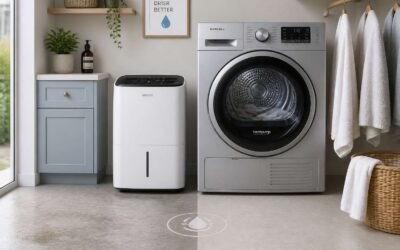
For maximum efficiency, consider the source. Bathrooms and kitchens generate steam, so position the unit nearby but not in the direct line of splash zones. A laundry room with wet washing is another problem area.
– Keep at least 30 cm of clearance on all sides.
– Close the doors and windows to create a sealed environment.
– Place it on a flat, level surface to prevent vibration and stress on the compressor.
If you own a dehumidifier 10l, you will notice it struggles if placed in a draughty hallway. The constant influx of outside air makes it work harder to keep up. I find the best approach is to set it up in the room that feels the most damp first thing in the morning. The machine moves on castors, so relocating it is a simple task.
Avoiding Obstructions and Ventilation Issues
The machine depends on unobstructed airflow to perform its daily extraction. I often find units with the rear intake pressed against a skirting board, or a pile of laundry resting on the exhaust grille. The compressor hums, yet the moisture stays in the air.
Ventilation issues appear when expelled air has nowhere to go. A recessed alcove creates a loop where damp air recirculates straight back into the intake. A quick glance at the space around the appliance takes seconds.
Common obstruction sources:
- Furniture legs crowding the intake panel
- Curtains drifting against the side vents
- Cables and cords coiled close to the compressor
Once cleared, the dehumidifier 10l draws freely and the room responds within a day.
Adjusting Settings for Seasonal Changes
In the damp grip of a coastal winter, the air itself becomes a sponge, saturating wardrobes and leaving a chill that seeps into the bones. Most people set their machine once and forget it, but the seasons in South Africa demand more subtle intervention. The internal hygrometer on your dehumidifier 10l measures relative humidity, but your comfort zone shifts as the weather turns. During the colder months, the dew point drops, meaning moisture condenses on cold surfaces like windows and tiled floors. Running the unit on a lower target, say 50 percent, prevents that surface condensation while easing the strain on the compressor. In summer, when the air holds more heat and vapour, you often want to keep the unit humming to maintain a drier, cooler feel.
The built-in humidistat gives you control, but you must remember to revisit the dial or digital panel. A setting that felt perfect in July will leave the room feeling arid and uncomfortable by January. Here are a few adjustments worth considering as the seasons shift:
– Reduce the target humidity by five to ten percent in winter to tackle condensation on glass.
– Increase the fan speed slightly during humid summer mornings to handle peak moisture loads.
– Switch to continuous mode for a few days after a cold front passes through.
Manual adjustments matter, especially if you use the machine in different rooms. A bedroom at night benefits from a slightly higher humidity setting to prevent dry skin and irritated sinuses. The dehumidifier 10l responds well to these small tweaks, and the room stays balanced without you constantly emptying the tank or fighting with the controls.
Safety Precautions for Daily Use
Most manuals earn their keep as doorstops, but placement rules for your dehumidifier 10l deserve a second glance. I once watched a friend place his unit directly against a wall, then complain about mysterious rattling sounds. The poor machine was gasping for air, and so was the room. Position matters more than you think, especially when dealing with the quirky geometry of South African homes where passageways and open-plan spaces create odd airflow patterns. Give your machine at least thirty centimeters of breathing room on all sides, and keep it away from heat sources like kettles or direct sunlight, which can trick the sensors into complacency.
Safety is less about paranoia and more about common sense, but here are a few daily rituals worth adopting:
– Keep the power cord away from high-traffic areas where someone might trip or yank it loose.
– Avoid positioning the unit on uneven surfaces where the water tank could shift and spill.
– Never block the air intake with curtains or laundry, no matter how tempting it is to dry clothes on top.
Electricity and water mix about as well as a cat and a bath, so always unplug the unit before emptying the tank or cleaning any component. If you hear a gurgling sound that seems particularly enthusiastic, check that the tank is seated properly. A misaligned tank in a dehumidifier 10l will leak a puddle that rivals a burst geyser. And please, do not run extension cords across doorways to power this thing. Invest in a proper outlet or rearrange the room. Your future self, the one not dealing with a tripped breaker during a storm, will be grateful. The unit itself is robust, but it is not designed to survive a flood of your own making.
0 Comments