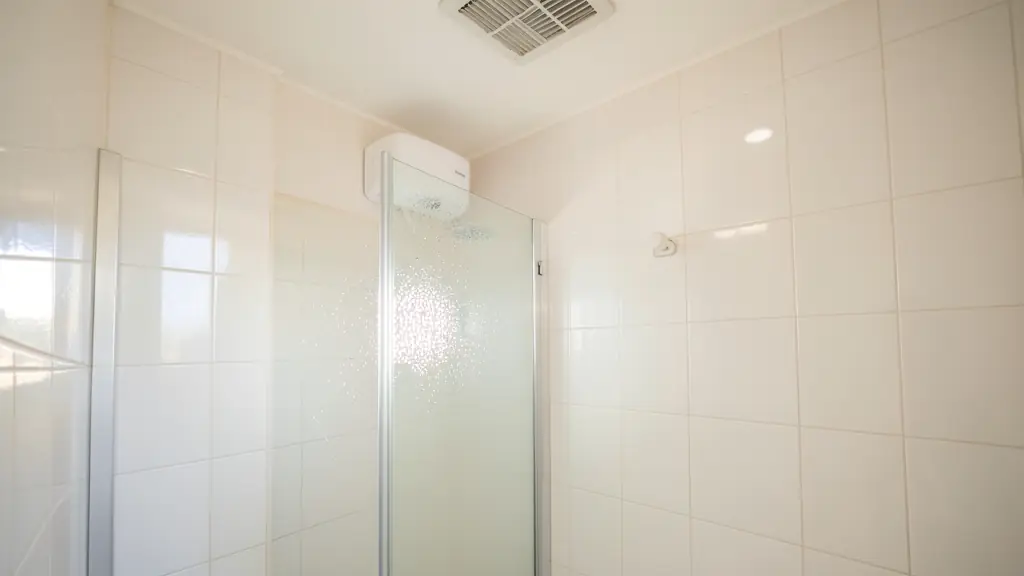
A hot shower can put litres of water into a small room, and a bathroom with no window or a weak fan holds that steam until it settles on the ceiling and the grout. A bathroom dehumidifier helps once ventilation is sorted. This page covers the extractor fan first, then small and wall-mounted units, safety around water, mould on ceilings and grout, and anti-mould paint. Send one request and independent suppliers and electricians in your area quote you directly.
Start with the extractor fan
Before buying any machine, check the extractor fan. A fan that is blocked with dust, too small for the room, or wired so it stops when the light goes off will leave steam behind. A fan that runs during the shower and for 15 to 20 minutes afterwards, and vents outside rather than into the ceiling void, removes more moisture than most appliances.
Open the window if there is one, squeegee the glass and tiles, and hang towels outside the room. A dehumidifier is for the moisture the fan cannot clear, especially in a bathroom with no window. In a wet Cape winter, when the air outside is as damp as the air inside, the fan alone often cannot win.
Small and wall-mounted units
A full portable dehumidifier is awkward in a bathroom, so suppliers often suggest one of these:
- A small compact unit kept just outside the door, drying the bathroom air through the open door after each shower.
- A wall-mounted unit fitted high on a wall with a drain line, switching on at a set humidity.
- A built-in extractor with a humidity sensor, which runs only when steam builds up.
Capacity matters less here than in a bedroom, because the room is small. Ask for the unit that suits the room volume and keep the door closed while it runs. The general guide at dehumidifiers covers sizing.
Safety near water
Water and electricity are a serious combination. Keep any plug-in unit and its plug point well away from the bath and shower, out of splashes, and follow the maker's manual and the wiring regulations. A permanent unit or a fan should be fitted by a registered electrician who issues a certificate of compliance. Never run an extension lead into a wet room.
If you are unsure where a unit may go, ask the supplier or electrician before buying. A unit kept in the passage and drying the bathroom with the door open is often the safer arrangement.
Mould on ceilings and grout
Black spots on the ceiling and dark grout are signs of long-term damp. Clean small patches with a suitable mould cleaner, gloves, eye protection and a mask, and never mix bleach with other cleaners. Let the wall dry, then repaint with an anti-mould paint, which slows growth on the paint film but does not fix the damp behind it.
A large area, or mould in the ceiling board, may need a contractor. See dehumidifiers for mould and mould removal for what that involves.
What to put in your request
- Bathroom size, and whether it has a window
- Whether there is an extractor fan and if it works
- Where mould shows: ceiling, grout, walls or cupboards
- Whether you want a plug-in unit or a fitted one
- Your suburb or town and when you want the work done
Bathroom Dehumidifiers for homes, rentals, businesses and industry
- Homeowners and tenants: stops steam settling on the ceiling and grout in a bathroom with no window or a weak fan
- Landlords, agents and body corporates: reduces mould complaints in rental bathrooms where tenants keep the door and window shut
- Offices, schools and clinics: dries shower and changing rooms in an office or clinic that stay damp after use
- Warehouses, archives and storage: helps a staff shower room or ablution block dry out between shifts
- Factories and food plants: keeps wash bays and ablution blocks from growing mould and peeling paint
- Growers, nurseries and farms: dries the wash room and boot room on a farm where wet gear is hung up
- Hotels, gyms, spas and pools: keeps guest bathrooms, spa showers and gym changing rooms fresh between uses
- Insurers, assessors and restoration firms: helps dry a bathroom after a leaking pipe or shower waste before tiles are replaced
- Builders, HVAC engineers and contractors: specifies a fan and a small unit for a bathroom that will have no opening window
Frequently asked questions
Do you sell dehumidifiers yourselves?
No. We are a free quote request service. We pass your request to independent suppliers, electricians and mould contractors who work in your area, and they quote you directly.
Is a bathroom dehumidifier better than an extractor fan?
Usually not. A working fan that vents outside is the first fix. A dehumidifier adds to it, especially in a bathroom with no window, or when the outside air is as wet as the air inside.
Can I put a portable dehumidifier inside the bathroom?
Only if the maker's manual allows it and the plug point is well away from splashes. Many people keep the unit just outside and leave the bathroom door open while it runs.
Will anti-mould paint solve my damp ceiling?
No. It slows mould on the paint, but the moisture still has to be removed with ventilation or drying, and any leak above the ceiling has to be fixed first.
Bathroom Dehumidifiers by province and city
- Johannesburg
- Pretoria
- Centurion
- Midrand
- Sandton
- Randburg
- Roodepoort
- Krugersdorp
- Randfontein
- Germiston
- Boksburg
- Benoni
- Kempton Park
- Alberton
- Vanderbijlpark
- Vereeniging
- Durban
- Pinetown
- Pietermaritzburg
- Richards Bay
- Newcastle
- Ladysmith
- Gqeberha (Port Elizabeth)
- East London
- Kariega (Uitenhage)
- Mthatha
- Cape Town
- Bellville
- Paarl
- Stellenbosch
- George
- Worcester
- eMalahleni (Witbank)
- Middelburg
- Secunda
- Mbombela (Nelspruit)
- Rustenburg
- Brits
- Klerksdorp
- Potchefstroom
- Mahikeng
- Polokwane
- Tzaneen
- Kimberley
- Upington
- Bloemfontein
- Welkom
- Sasolburg