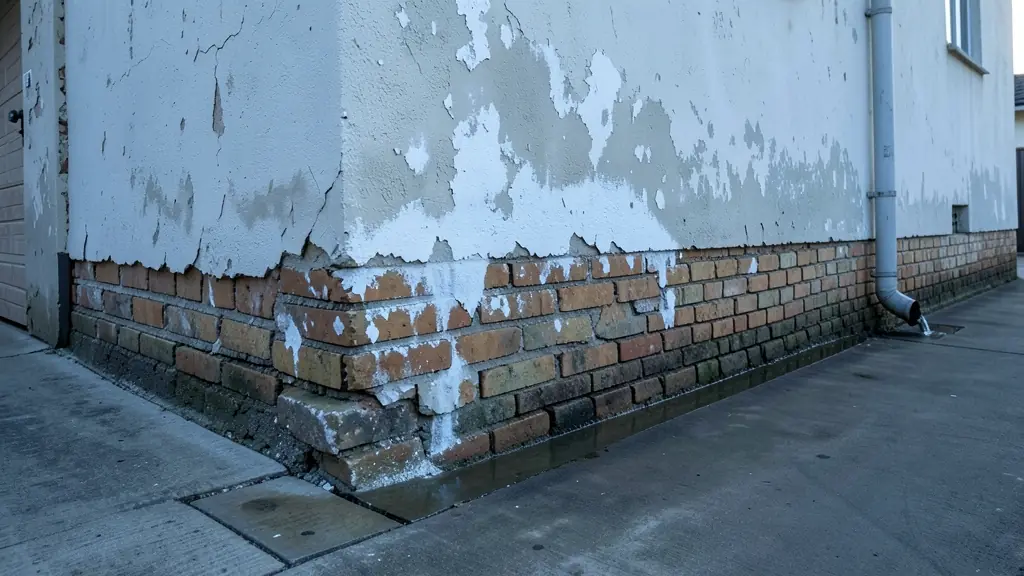
Damp that stains walls, lifts paint and leaves white salts is usually one of three things: rising damp, penetrating damp or condensation. Each needs a different fix, so a proper diagnosis comes first. Damp proofing covers the repairs that stop moisture entering a building: a damp-proof course, drainage, waterproofing and replastering. Treating the wrong problem wastes money. Send one request and independent damp proofing contractors near you quote you directly.
Which kind of damp do you have
- Rising damp: ground moisture climbing a masonry wall where the damp-proof course (DPC) is missing, damaged or bridged by soil, paving or plaster. Look for tide marks and white salts in the lower wall, usually below about a metre.
- Penetrating damp: rain getting in through cracks, roofs, parapets, gutters, window sills or leaking pipes, often after storms.
- Condensation: water forming on cold surfaces indoors, with black mould in corners. This is a ventilation and humidity problem, not a wall problem (see dehumidifiers).
How rising damp is treated
The building regulations require damp proofing in new buildings. For older walls, contractors may inject a chemical DPC, often a silicone cream into drilled holes along a mortar course. Salt-damaged plaster is hacked off and replaced with a salt-resistant or waterproof plaster system. Lowering soil and paving that bridge the DPC and fixing drainage often matter as much as the injection. Walls then need time to dry before they are painted; painting too soon traps the moisture. Many contractors also leave a gap or a drainage channel between the soil and the wall, and ask you to keep flowerbeds, compost and paving from touching the base of the wall again after the job.
Penetrating damp and waterproofing
Here the work is outside: sealing cracks, repairing flashings, clearing gutters and downpipes, waterproofing flat roofs and parapets, fixing window sills and applying a breathable or waterproof coating to exposed walls. Cape and KwaZulu-Natal coastal homes with driving rain often need the outer face of the wall treated, while a Highveld home with a summer storm leak may only need a flashing or a roof repair. Cracks wider than a hairline should be opened and filled properly instead of being painted over. Basements and retaining walls may need drainage and waterproofing membranes. A damp inspector can trace the source with a moisture meter before work starts (see damp inspections).
Quotes, guarantees and aftercare
Damp proofing is often priced per metre of wall, plus plaster and paint. Ask what the guarantee covers, for how long, and whether it transfers to a buyer. Ask how the contractor will treat the cause, not only the stain, and whether a damp inspector has confirmed the diagnosis. Compare at least two quotes on the same scope: the height of the plaster removed, the length of wall injected, the type of replaster and the paint, because cheap quotes often leave one of these out. Once the wall is dry, remove any mould (see mould removal) and consider anti-mould paint in wet rooms.
What to put in your request
- Photos of the damp, including how high the marks go
- Age and type of the building, and the wall material
- Soil, paving, gutters and downpipes near the wall
- Whether it worsens after rain
- Any previous treatment or guarantee
Damp Proofing for homes, rentals, businesses and industry
- Homeowners and tenants: tide marks and flaking paint on an older brick home traced to a bridged DPC and treated
- Landlords, agents and body corporates: a rental's damp walls diagnosed and treated, with a written guarantee that can be kept on file
- Offices, schools and clinics: ground floor walls of an older office building treated so staff rooms and stores stay dry
- Warehouses, archives and storage: damp walls and floors in an older warehouse treated and waterproofed before stock is stored
- Factories and food plants: walls and floors of a production area waterproofed to stop moisture reaching products or machines
- Growers, nurseries and farms: farm buildings and stores treated for rising damp so seed and equipment stay dry
- Hotels, gyms, spas and pools: guest houses and heritage buildings treated and replastered, scheduled around bookings
- Insurers, assessors and restoration firms: damp proofing and replastering after the structure has been dried, when leaks have been fixed
- Builders, HVAC engineers and contractors: a damp proofing quote for a buyer's or a client's refurbishment, with the plaster and paint included
Frequently asked questions
Do you treat damp yourselves?
Will a dehumidifier cure rising damp?
How long before I can paint after treatment?
Is damp proofing needed before I sell or let?
Damp Proofing by province and city
- Johannesburg
- Pretoria
- Centurion
- Midrand
- Sandton
- Randburg
- Roodepoort
- Krugersdorp
- Randfontein
- Germiston
- Boksburg
- Benoni
- Kempton Park
- Alberton
- Vanderbijlpark
- Vereeniging
- Durban
- Pinetown
- Pietermaritzburg
- Richards Bay
- Newcastle
- Ladysmith
- Gqeberha (Port Elizabeth)
- East London
- Kariega (Uitenhage)
- Mthatha
- Cape Town
- Bellville
- Paarl
- Stellenbosch
- George
- Worcester
- eMalahleni (Witbank)
- Middelburg
- Secunda
- Mbombela (Nelspruit)
- Rustenburg
- Brits
- Klerksdorp
- Potchefstroom
- Mahikeng
- Polokwane
- Tzaneen
- Kimberley
- Upington
- Bloemfontein
- Welkom
- Sasolburg