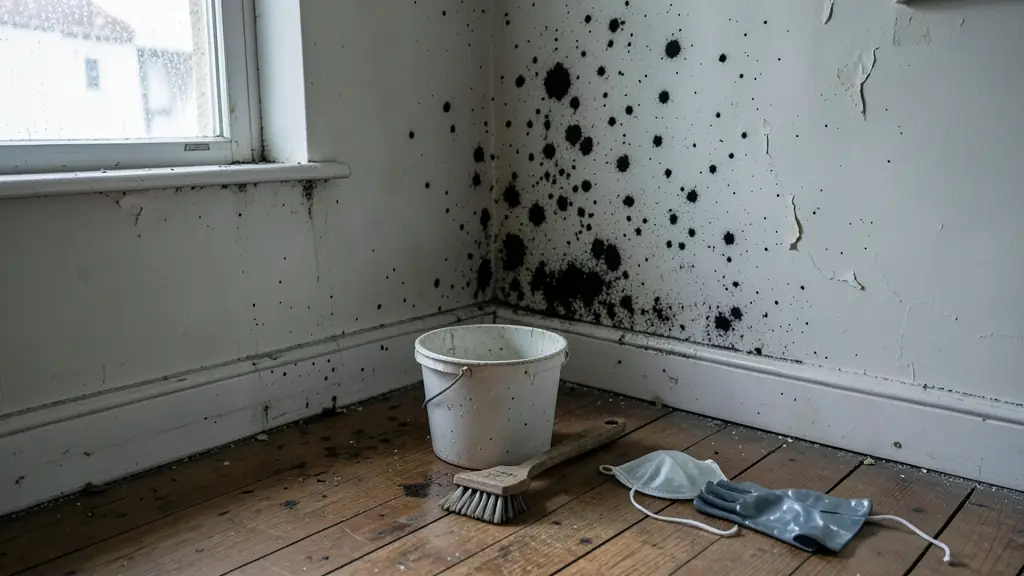
Mould shows up as black, green or grey spots on walls, ceilings, cupboards and window frames, often with a musty smell. Mould removal means cleaning or removing it properly and, more importantly, finding the moisture that feeds it. If the cause stays, the spots return within months. A small patch on a hard surface can be cleaned at home, but bigger or hidden mould needs a contractor. Send one request and independent mould removal contractors near you quote you directly.
DIY or a contractor
A small area on a non-porous surface, such as a tile, a window frame or sealed paint, can often be cleaned with a suitable mould cleaner, gloves, eye protection and a mask. Follow the label and never mix bleach with other cleaners. Bleach can whiten mould on porous materials without killing the roots. Call a contractor for larger areas, mould inside ceilings, carpets or drywall, mould after a flood, or when someone in the home has asthma, allergies or a weak immune system. Wear gloves, goggles and a close-fitting mask, keep the room ventilated while you work and do not brush dry mould, because that throws spores into the air. If anyone is unwell, see a doctor; mould can make asthma and allergies worse and irritate the nose, eyes and throat.
What a contractor does
- Finds the source: condensation, a leaking pipe, penetrating damp or rising damp (see damp inspections).
- Contains the area so spores do not spread to other rooms.
- Removes badly affected materials such as soaked ceiling board, carpet or skirting.
- Cleans and vacuums with HEPA equipment, then treats the surface.
- Dries the room and advises on follow-up.
Fix the cause or it comes back
A dehumidifier does not kill mould, but it makes the air too dry for it to keep growing, so it is a useful follow-up (see dehumidifiers for mould). Keep humidity below about 60%, ventilate bathrooms and kitchens, stop drying washing inside without ventilation and repair leaks. If the wall itself is wet, you may need damp proofing. Anti-mould paint only helps after the wall is clean and dry.
What a quote should cover
A good quote lists the rooms and the area, how the mould will be removed, what materials will be replaced, who does the repair and repainting, and how the moisture source is dealt with. Ask whether the contractor finds and fixes the cause or only cleans. Ask for photos before and after and what guarantee, if any, applies. Ask about access, because working inside a ceiling void costs more than a bathroom wall. Ask how long the rooms will be out of use, what protective sheeting will be used, how waste is removed, and whether the price is fixed or depends on what is found once the damaged boards are opened up. Agree who will fix the leak or vent that caused it, and in what order the trades will come.
What to put in your request
- Photos of the mould in each room
- The approximate area and the surfaces affected
- Any leak, flood or damp wall nearby
- Whether anyone has asthma, allergies or a weak immune system
- Whether you rent or own, and whether insurance is involved
Mould Removal for homes, rentals, businesses and industry
- Homeowners and tenants: black patches cleaned from a bedroom wall and ceiling, with advice on why they keep returning
- Landlords, agents and body corporates: a documented clean and repair for a rental after a tenant complaint, with the cause identified
- Offices, schools and clinics: mould treated in a storeroom or meeting room before it reaches stored paper and furniture
- Warehouses, archives and storage: mould removed from walls and shelving after a roof leak, with the damp source repaired
- Factories and food plants: affected areas cleaned and treated in a way that suits the plant's hygiene rules, ask the firm
- Growers, nurseries and farms: mould treated on walls and structures of a grow room or tunnel, plus advice on humidity control
- Hotels, gyms, spas and pools: mould in guest bathrooms and rooms removed quickly and discreetly so rooms can go back on sale
- Insurers, assessors and restoration firms: mould clearance after water damage, working beside drying contractors and the insurer's assessor
- Builders, HVAC engineers and contractors: a mould clean and moisture check agreed before repainting or handing over a refurbished unit
Frequently asked questions
Do you remove mould yourselves?
Will bleach get rid of mould on my wall?
Why does the mould keep coming back?
Is mould removal covered by insurance?
Mould Removal by province and city
- Johannesburg
- Pretoria
- Centurion
- Midrand
- Sandton
- Randburg
- Roodepoort
- Krugersdorp
- Randfontein
- Germiston
- Boksburg
- Benoni
- Kempton Park
- Alberton
- Vanderbijlpark
- Vereeniging
- Durban
- Pinetown
- Pietermaritzburg
- Richards Bay
- Newcastle
- Ladysmith
- Gqeberha (Port Elizabeth)
- East London
- Kariega (Uitenhage)
- Mthatha
- Cape Town
- Bellville
- Paarl
- Stellenbosch
- George
- Worcester
- eMalahleni (Witbank)
- Middelburg
- Secunda
- Mbombela (Nelspruit)
- Rustenburg
- Brits
- Klerksdorp
- Potchefstroom
- Mahikeng
- Polokwane
- Tzaneen
- Kimberley
- Upington
- Bloemfontein
- Welkom
- Sasolburg