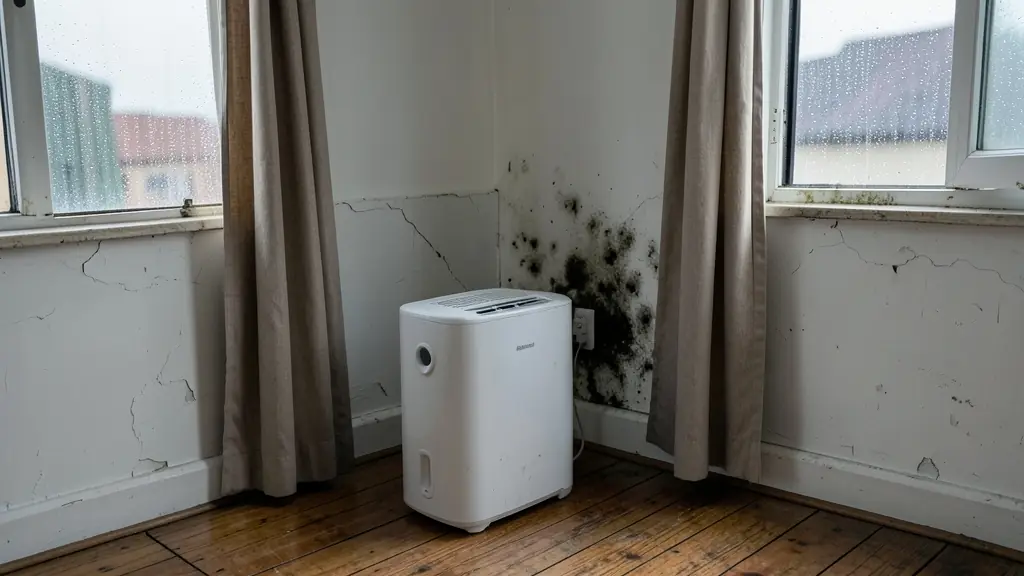
A dehumidifier for mould will not remove mould that is already on the wall, but it can stop it from growing back by keeping the air dry. Mould needs moisture, and most indoor mould in South African homes comes from condensation, leaks or damp washing. This page explains the target humidity, what a dehumidifier can and cannot do, the health points to bear in mind, and when to call a contractor. Send one request and independent suppliers and mould contractors in your area quote you directly.
What a dehumidifier does about mould
A dehumidifier makes the air too dry for mould to keep growing. It does not kill mould or clean it off. Spots on a wall, a musty cupboard or a stained ceiling have to be cleaned or removed, the surface dried, and the moisture source found.
Common sources are a leaking roof or pipe, rising or penetrating damp, a cold outside wall where air condenses, a bathroom with poor extraction, unflued gas heaters and washing dried indoors. If the source is a leak or damp wall, no machine will fully fix it. See damp proofing and damp inspections.
Target humidity and where to measure
Keeping relative humidity below about 60% is commonly advised to discourage mould and dust mites, and 40 to 60% is a comfortable range. Do not dry the air much below 30%, as very dry air irritates skin, eyes and the nose.
Put a digital thermo-hygrometer in the room, not next to the machine, and watch it across a day. Check the coldest wall too, because the air there is cooler and wetter than the middle of the room. Mould often starts behind wardrobes and beds where air does not move, so pull furniture out a little and let air circulate. Set the dehumidifier's humidistat to around 50 to 55% and adjust from there. A humidity meter costs little and shows whether the problem is solved.
Clean first, then dry
Small areas of mould on hard surfaces can often be cleaned with a suitable mould cleaner, gloves, eye protection and a mask. Follow the label and never mix bleach with other cleaners. Bleach can whiten mould on porous material without reaching the roots.
- Clean and let the wall dry fully.
- Run the dehumidifier with doors and windows closed.
- Move furniture a hand's width off cold outside walls.
- Repaint with anti-mould paint once the wall is dry and the cause is fixed.
Health and when to call a contractor
Damp and mould can make asthma and allergies worse and irritate the nose, eyes, throat and skin. Babies, older people and anyone with asthma, allergies or a weak immune system are more sensitive. See a doctor about symptoms; a machine is not a medical treatment.
Large patches, mould inside a ceiling, carpets or drywall, mould after a flood, or mould in a home with someone vulnerable usually call for a professional. Ask whether they fix the cause or only clean. See mould removal.
What to put in your request
- Where the mould is and roughly how big the area is
- Whether there has been a leak, a flood or a damp wall
- Room size in metres and whether it is heated
- Whether anyone has asthma, allergies or is a baby or elderly
- A dehumidifier only, or cleaning and repairs too
Dehumidifiers for Mould for homes, rentals, businesses and industry
- Homeowners and tenants: stops black spots coming back on bedroom walls, wardrobes and ceilings after they are cleaned
- Landlords, agents and body corporates: helps keep a flat free of mould between tenants and shows tenants a clear way to manage damp
- Offices, schools and clinics: controls musty smells and spotted ceilings in offices, classrooms and clinic rooms
- Warehouses, archives and storage: stops mould on cardboard, paper, textiles and pallets held in a damp store
- Factories and food plants: keeps mould away from packaging, ingredients and finished goods in a damp plant room
- Growers, nurseries and farms: helps control mould on seed, stock and drying produce in a closed store
- Hotels, gyms, spas and pools: removes damp smells in guest rooms and holiday homes left closed between visits
- Insurers, assessors and restoration firms: dries walls and floors after water damage so mould does not start behind the paint
- Builders, HVAC engineers and contractors: dries new work in wet weather and helps hand over a home free of early mould
Frequently asked questions
Do you sell dehumidifiers yourselves?
No. We are a free quote request service. Your request goes to independent suppliers, mould contractors and damp specialists in your area, who quote you directly.
Will a dehumidifier stop black mould on my walls?
It can stop new growth by keeping the air dry, but it will not remove mould that is already there. Clean it off, fix the source of the damp and keep humidity below about 60%.
How long should I run it?
In a damp room it may need to run for many hours a day at first. Set the humidistat to your target and let it cycle. Once the walls are dry, the unit will run less.
Is a moisture absorber enough for a damp bedroom?
Usually not. Tubs of calcium chloride suit a cupboard or a small closed space. A damp room needs an electric unit. See moisture absorbers.
Dehumidifiers for Mould by province and city
- Johannesburg
- Pretoria
- Centurion
- Midrand
- Sandton
- Randburg
- Roodepoort
- Krugersdorp
- Randfontein
- Germiston
- Boksburg
- Benoni
- Kempton Park
- Alberton
- Vanderbijlpark
- Vereeniging
- Durban
- Pinetown
- Pietermaritzburg
- Richards Bay
- Newcastle
- Ladysmith
- Gqeberha (Port Elizabeth)
- East London
- Kariega (Uitenhage)
- Mthatha
- Cape Town
- Bellville
- Paarl
- Stellenbosch
- George
- Worcester
- eMalahleni (Witbank)
- Middelburg
- Secunda
- Mbombela (Nelspruit)
- Rustenburg
- Brits
- Klerksdorp
- Potchefstroom
- Mahikeng
- Polokwane
- Tzaneen
- Kimberley
- Upington
- Bloemfontein
- Welkom
- Sasolburg