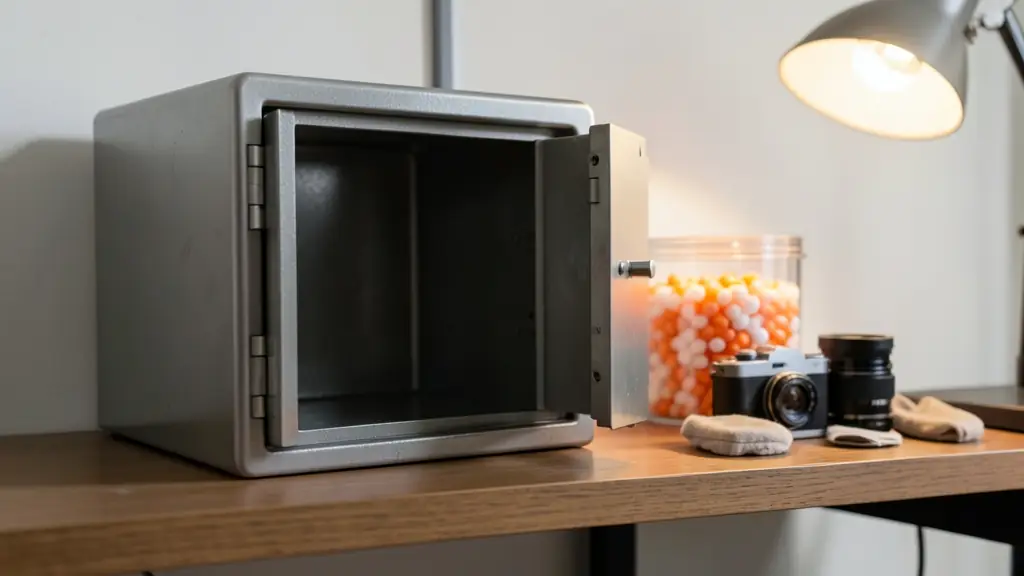
Silica gel and other desiccant packs are the quiet workhorses of dry storage: sachets in a shoe box, canisters in a gun safe or camera cabinet, strips in a shipping container. They absorb moisture without power and are cheap enough to use in quantity. Choosing the right pack, in the right quantity, makes the difference between protected goods and rusty ones. Tell us what you store, and we pass your request to independent suppliers who quote you directly.
Types of desiccant
Silica gel is the best known, but there are several:
- Silica gel beads: in sachets or canisters, with indicating beads that change colour when saturated.
- Clay desiccants: low cost, often used in packaging, and they work at normal temperatures.
- Container desiccants: hanging strips or poles that protect cargo from container rain on long sea voyages.
- Food-safe sachets: made for dry foods and supplements, where the maker must say they are suitable.
Where they work well
They suit enclosed spaces: gun safes, camera and lens cabinets, tool boxes, electronics in storage, document boxes, instruments and packaged goods for export. They are no use in a room with open doors. For a cupboard or a room, see moisture absorbers or a dehumidifier. Exporters through ports such as Durban and Cape Town often put desiccant in containers, because cargo can cool, and water condenses on the inside of the roof and drips onto the goods.
Reusing and replacing
Many silica gel packs can be dried out and reused. Follow the maker's instructions, which usually involve gentle heat in an oven for a set time. Do not do this with sachets that are not marked as reusable, and do not heat packs in a microwave unless the maker says you may. Indicating beads show when to act, so look at them every month or so. Containers and canisters with a window let you check without opening the pack. Keep spare packs sealed in an airtight jar until you need them, because an open pack starts absorbing moisture at once and is half used before it reaches the safe. When you swap packs, do it quickly and close the safe or box straight away so that humid room air does not sneak in.
How much to use and safety
The amount depends on the volume of the space, how airtight it is and how humid the climate is. Makers publish a guide per cubic metre or per cubic litre, so ask for it. In a leaky box or a humid port town, use more. Keep packs away from children and pets, do not eat the contents and wash your hands if the beads spill. Do not place desiccant sachets in direct contact with food unless they are marked as food-safe.
What to put in your request
- What you store: guns, cameras, tools, stock or export goods
- The volume of the space, or the box or container size
- Sachets, canisters, reusable packs or container strips
- Whether food-safe packs are needed
- Quantity and delivery address
Silica Gel and Desiccant Packs for homes, rentals, businesses and industry
- Homeowners and tenants: canisters in gun safes, camera cabinets and boxes of documents and keepsakes
- Landlords, agents and body corporates: packs left in a closed flat's safe or storage cupboard between tenants
- Offices, schools and clinics: packs in archive boxes, data storage and cabinets of equipment
- Warehouses, archives and storage: sachets in packaged stock and strips in containers and sealed bins
- Factories and food plants: packs for finished goods, electronics and spare parts in storage
- Growers, nurseries and farms: packs in seed storage jars and in boxes of dry seed
- Hotels, gyms, spas and pools: packs in safes and in stores of electronics and linen boxes
- Insurers, assessors and restoration firms: packs in boxes of salvaged documents, photos and electronics
- Builders, HVAC engineers and contractors: packs in tool boxes, equipment cases and site stores of fittings
Frequently asked questions
How do I dry out silica gel?
Are silica gel packs dangerous?
How many packs do I need for a gun safe?
Do you sell desiccant packs yourselves?
Silica Gel and Desiccant Packs by province and city
- Johannesburg
- Pretoria
- Centurion
- Midrand
- Sandton
- Randburg
- Roodepoort
- Krugersdorp
- Randfontein
- Germiston
- Boksburg
- Benoni
- Kempton Park
- Alberton
- Vanderbijlpark
- Vereeniging
- Durban
- Pinetown
- Pietermaritzburg
- Richards Bay
- Newcastle
- Ladysmith
- Gqeberha (Port Elizabeth)
- East London
- Kariega (Uitenhage)
- Mthatha
- Cape Town
- Bellville
- Paarl
- Stellenbosch
- George
- Worcester
- eMalahleni (Witbank)
- Middelburg
- Secunda
- Mbombela (Nelspruit)
- Rustenburg
- Brits
- Klerksdorp
- Potchefstroom
- Mahikeng
- Polokwane
- Tzaneen
- Kimberley
- Upington
- Bloemfontein
- Welkom
- Sasolburg