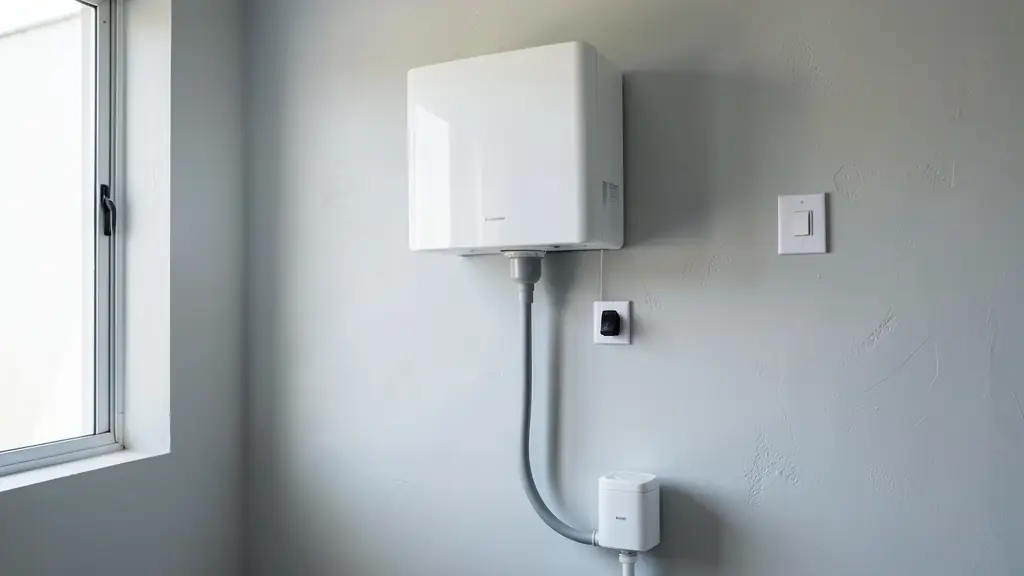
A portable dehumidifier that you carry and empty every day soon becomes a chore. Proper dehumidifier installation fixes that: the unit sits where it works best, drains to a gully or a condensate pump, and runs from a safe supply with a humidistat so it switches itself on and off. That can be a wall-mounted unit in a flat, a ducted unit in a ceiling, a pool dehumidifier or an industrial unit in a store. Send one request and independent installers near you quote you directly.
What gets installed
- Wall-mounted units for bedrooms, bathrooms, basements and plant rooms.
- Portable units given a permanent drain hose or a pump, so there is no tank to empty.
- Ducted and whole-house units in a ceiling or plant room (see ducted dehumidifiers).
- Industrial and pool units with ducting and controls, designed by an HVAC engineer (see pool dehumidification).
Drains and pumps
Water must leave the unit by gravity or by pump. A gravity drain needs a steady fall, a trap or air break and a spot to discharge, such as an outside gully, a basin waste or a drain tray. Where the unit sits below the outlet, a condensate pump lifts the water through a small hose to a higher drain. Some dehumidifiers have a built-in pump; ask. Fit the hose without kinks, and test it with a full tank before you leave. A blocked or leaking drain line is the most common reason a fitted unit fails. In a flat or sectional title block, check the body corporate rules before drilling through walls or discharging water onto a shared balcony or common property.
Power and safety
A larger unit should run from a dedicated circuit with its own breaker, or be hard-wired through an isolator. Electrical work must be done by a registered electrician, who issues a certificate of compliance (CoC) when it is finished. Keep units and plug points well away from showers and baths, and follow the maker's manual and the wiring regulations in wet areas. Check the unit restarts by itself after a power cut, because load shedding will switch it off. Refrigerant joints on split systems must be made by a registered refrigeration technician.
Controls and commissioning
The installer should set the humidistat to a sensible target, commonly advised at about 50 to 60% for a damp home, then check that the unit cycles, that air can reach the grille, and that it is not pulling humid air through a gap. Ask for the manual, the warranty papers and a short run-through of filter cleaning, the drain check and what the control lights mean, so you can look after the unit yourself between services. After a week, read your humidity meter and ask for an adjustment if the room is still damp (see humidity meters).
What to put in your request
- The type of unit, or the room sizes for a recommendation
- Where it should go and where a drain could run
- Power available: plug point, DB board and distance
- Photos of the wall, ceiling or plant room
- Whether you need the unit supplied as well as fitted
Dehumidifier Installation for homes, rentals, businesses and industry
- Homeowners and tenants: a wall unit fitted in a damp bedroom or a portable unit given a drain, so no tank needs emptying
- Landlords, agents and body corporates: a fixed, drained unit installed in a rental with a condensation problem, with the paperwork for the file
- Offices, schools and clinics: a unit fitted in a records room or basement with a drain and a humidistat so it runs unattended
- Warehouses, archives and storage: industrial units mounted and drained along a storage aisle, with a quote for the electrical work
- Factories and food plants: dehumidifiers fitted into a process area with ducting, controls and a commissioning check
- Growers, nurseries and farms: units installed in a tunnel or grow room with drains and controls tied to a target humidity
- Hotels, gyms, spas and pools: pool, spa and plant room units fitted quietly, with ducting and drains planned around the building
- Insurers, assessors and restoration firms: a fitted solution for a building that will stay damp after the emergency drying is done
- Builders, HVAC engineers and contractors: a quote for fitting and wiring dehumidification into a new build or refurbishment plan
Frequently asked questions
Do you install dehumidifiers yourselves?
Can I just add a drain hose to my portable unit?
Do I need an electrician?
Where should the unit go?
Dehumidifier Installation by province and city
- Johannesburg
- Pretoria
- Centurion
- Midrand
- Sandton
- Randburg
- Roodepoort
- Krugersdorp
- Randfontein
- Germiston
- Boksburg
- Benoni
- Kempton Park
- Alberton
- Vanderbijlpark
- Vereeniging
- Durban
- Pinetown
- Pietermaritzburg
- Richards Bay
- Newcastle
- Ladysmith
- Gqeberha (Port Elizabeth)
- East London
- Kariega (Uitenhage)
- Mthatha
- Cape Town
- Bellville
- Paarl
- Stellenbosch
- George
- Worcester
- eMalahleni (Witbank)
- Middelburg
- Secunda
- Mbombela (Nelspruit)
- Rustenburg
- Brits
- Klerksdorp
- Potchefstroom
- Mahikeng
- Polokwane
- Tzaneen
- Kimberley
- Upington
- Bloemfontein
- Welkom
- Sasolburg