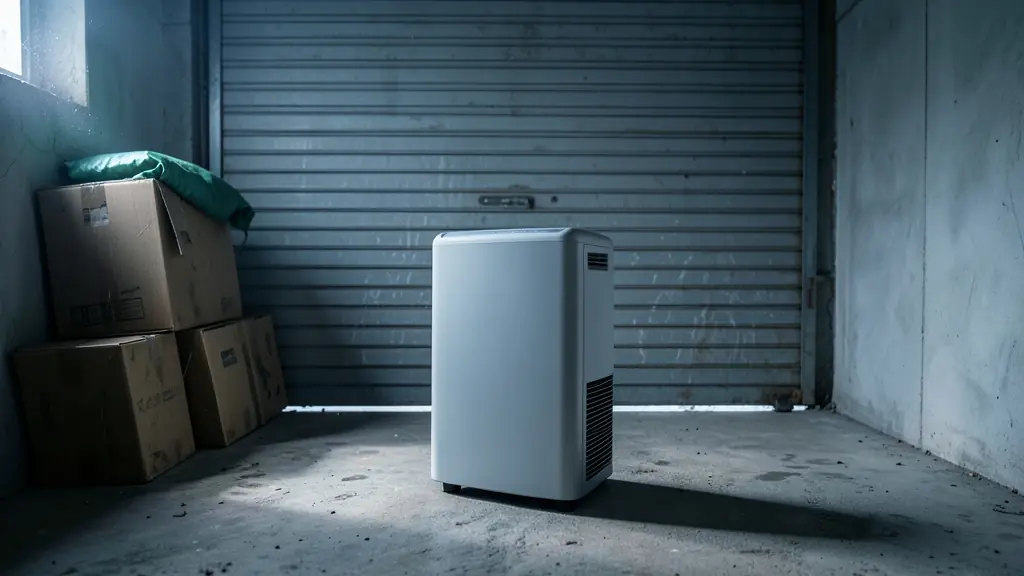
A desiccant dehumidifier dries air with a slowly turning wheel instead of a cold coil, so it keeps working when the room is cold. That makes it a good fit for garages, boats, caravans, cold stores and rooms that are not heated. This page explains how the rotor works, where it beats a compressor unit, the trade-off in power use, low humidity targets and industrial uses. Send one request and independent suppliers in your area quote you directly.
How the rotor works
The wheel, or rotor, is coated with a desiccant, often zeolite or silica gel, that absorbs water vapour from the air passing through. As the wheel turns, a small heater dries one section so it can absorb again. The moist air from that section is either vented outside or condensed into a tank or drain.
Because nothing is chilled below its dew point, there is no coil to ice up. This is also why a desiccant unit suits a cold Highveld morning when a compressor unit would struggle. This is the main difference from the compressor units described under dehumidifiers.
Where it works best
A desiccant unit keeps pulling water in a cold room where a compressor unit slows down or ices up. Typical places are:
- Cold double garages and workshops on the Highveld and in the Free State in winter
- Boats, caravans and holiday homes that are left shut
- Unheated storerooms, basements and cellars
- Archives, museums and stores that need a low, steady humidity
Units are usually lighter and quieter than compressor models, which suits a caravan or a bedroom. In a very humid, warm room, such as coastal KwaZulu-Natal in summer, a compressor unit often removes more water for each unit of power.
Power use and heat
The trade-off is power. A desiccant unit usually draws more watts than a compressor unit of similar capacity, because it has a heater. It also warms the room more, which is a benefit in winter and a disadvantage in summer. Work out the running cost from the watts, the hours and your tariff per kWh.
Ask for litres a day at the temperature you will actually use it, since capacity figures vary with the conditions. Ask whether the unit restarts after a power cut and how loud it is on its highest setting.
Low targets and industrial desiccant units
Large desiccant units are used where the humidity must be held very low: pharmaceutical stores, food and drink processes, cold stores, electronics and some archives. They can reach low humidity targets that compressor machines cannot, and run in rooms below freezing point.
These are designed and sized by an HVAC engineer or specialist supplier from the moisture load. See industrial dehumidifiers for ducting, drains and power, and dehumidifier hire if you need one for a short job.
What to put in your request
- Room or space size in metres, and how cold it gets
- Where it will run: garage, boat, caravan, store or plant
- The humidity you need to hold, if known
- Power: standard plug, generator or inverter
- Buy or hire, and your town for delivery
Desiccant Dehumidifiers for homes, rentals, businesses and industry
- Homeowners and tenants: dries a cold garage, a cellar or a spare room that never warms up in winter
- Landlords, agents and body corporates: dries an unheated storeroom or basement flat where a compressor unit keeps icing up
- Offices, schools and clinics: holds a low humidity in an archive, a records vault or a museum store
- Warehouses, archives and storage: keeps a cold store or an unheated warehouse dry through the winter months
- Factories and food plants: holds a low, steady humidity in food, pharmaceutical or electronics process rooms
- Growers, nurseries and farms: dries a cold curing or seed store where a compressor unit will not hold the target
- Hotels, gyms, spas and pools: dries a wine cellar, a boat or a closed guesthouse over a cold season
- Insurers, assessors and restoration firms: adds drying capacity in cold weather when a compressor unit would struggle
- Builders, HVAC engineers and contractors: dries new work in cold weather when screeds and plaster take longer to cure
Frequently asked questions
Do you sell dehumidifiers yourselves?
No. We are a free quote request service. We pass your request to independent suppliers, hire firms and technicians in your area, and they quote you directly.
Is a desiccant dehumidifier better than a compressor one?
It depends where it is used. In a cold room it is usually better. In a warm, humid room a compressor unit often removes more water for each unit of electricity.
Does it use a lot of electricity?
Usually more than a compressor unit of similar capacity, because of the heater. Check the watts on the plate and multiply by your hours and tariff for a running cost estimate.
Can I use one in a caravan or a boat?
Yes, desiccant units are common for boats and caravans because they are light, work in the cold and do not ice up. Check the power supply and the drain or tank arrangement before you buy.
Desiccant Dehumidifiers by province and city
- Johannesburg
- Pretoria
- Centurion
- Midrand
- Sandton
- Randburg
- Roodepoort
- Krugersdorp
- Randfontein
- Germiston
- Boksburg
- Benoni
- Kempton Park
- Alberton
- Vanderbijlpark
- Vereeniging
- Durban
- Pinetown
- Pietermaritzburg
- Richards Bay
- Newcastle
- Ladysmith
- Gqeberha (Port Elizabeth)
- East London
- Kariega (Uitenhage)
- Mthatha
- Cape Town
- Bellville
- Paarl
- Stellenbosch
- George
- Worcester
- eMalahleni (Witbank)
- Middelburg
- Secunda
- Mbombela (Nelspruit)
- Rustenburg
- Brits
- Klerksdorp
- Potchefstroom
- Mahikeng
- Polokwane
- Tzaneen
- Kimberley
- Upington
- Bloemfontein
- Welkom
- Sasolburg