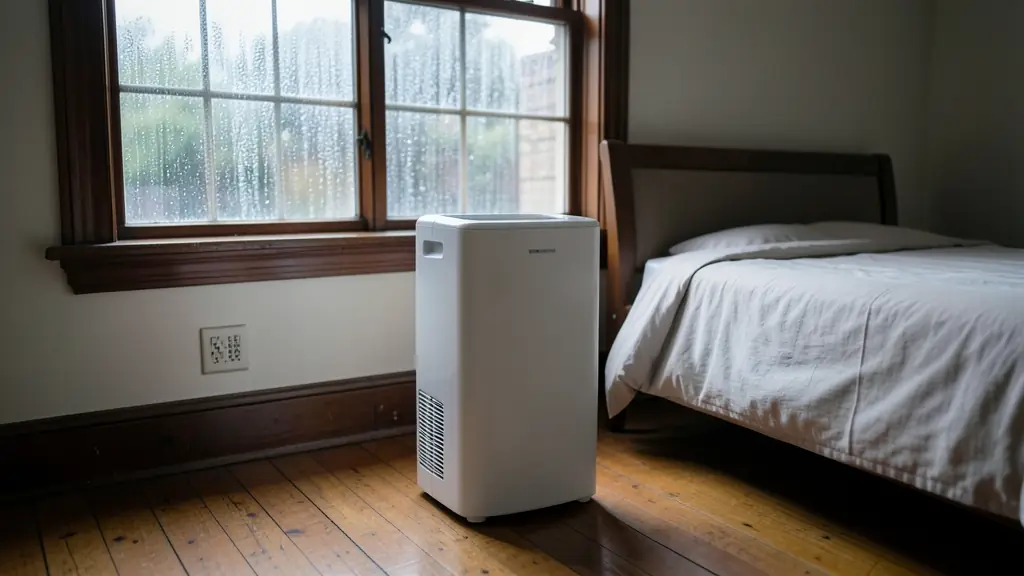
A dehumidifier pulls water vapour out of the air so walls, windows, cupboards and washing stay drier. In South Africa people reach for one when bedroom walls go black in a Cape winter, when a Durban flat stays muggy for months, or when laundry never dries indoors. This page explains how the machines work, the two main types, how to size one in litres a day, what it costs to run, and when hiring beats buying. Send one request and independent suppliers in your area quote you directly.
Signs you need one
The usual signs are condensation on windows in the morning, a musty smell in a room or cupboard, black spots in corners and behind furniture, and towels or washing that stay damp for days. A cheap digital hygrometer tells you the truth: relative humidity that sits above about 60% is commonly advised as the point where mould and dust mites do well.
A dehumidifier treats the air, not the cause. If the damp comes from a leak, rising damp or a blocked gutter, that has to be fixed too. See dehumidifiers for mould for how the two work together.
Compressor or desiccant
A compressor unit pulls room air over a cold coil, the water condenses into a tank or drain hose, and the air is warmed again, so the room ends slightly warmer. It works best in warm, humid rooms and loses capacity when it is cold, and the coil can ice up below about 15 °C.
A desiccant dehumidifier uses a slowly turning wheel that absorbs moisture, so it keeps working in a cold garage or an unheated room. It is usually lighter and quieter but draws more power. For most homes in the Cape, KwaZulu-Natal and the Garden Route, a compressor unit is the sensible start.
Sizing and features
Capacity is quoted in litres a day at the maker's test conditions, often warm and very humid, so a unit removes less in a cooler, drier room. Compare units at the same conditions. Home units are roughly 10 to 30 litres a day. Size by room volume (length x width x ceiling height), how damp it is and how much washing you dry indoors.
- Tank size and a continuous drain option, or a built-in pump to drain upward or far away
- A humidistat so you can set a target and let it cycle
- Auto restart after a power cut, which helps with load shedding (ask)
- Noise in decibels, power draw in watts and a washable filter
Running cost, placement, buy or hire
Running cost is watts x hours run, divided by 1000, times your tariff per kWh. A humidistat stops the compressor once the target is reached, which saves power. Place the unit in the damp room with doors closed, a little away from walls so air can flow, and empty the tank or fit a drain hose.
If you only need the room dried once, after a leak or new plaster, dehumidifier hire by the day or week costs less than buying. For permanent whole-house control see ducted dehumidifiers.
What to put in your request
- Room size in metres, including the ceiling height
- What you see: condensation, mould, musty smell or damp washing
- Whether the room is cold, unheated or often closed up
- Drain preference: tank, hose or a built-in pump
- Buy or hire, and your suburb or town for delivery
Dehumidifiers for homes, rentals, businesses and industry
- Homeowners and tenants: dries a bedroom, lounge or laundry where condensation and damp washing are a winter habit
- Landlords, agents and body corporates: keeps rental flats from growing black mould on walls and cupboards, so tenant complaints stop
- Offices, schools and clinics: controls humidity in offices, classrooms and records rooms that feel stuffy and smell musty
- Warehouses, archives and storage: protects stored paper, cardboard, textiles and electronics from damp air in a closed store
- Factories and food plants: keeps moisture away from products and packaging on a dry-air production line
- Growers, nurseries and farms: brings humidity down in a tunnel, nursery or seed store to limit mould and rot
- Hotels, gyms, spas and pools: removes damp smells and condensation in guest rooms, spa rooms and gyms
- Insurers, assessors and restoration firms: dries walls, floors and contents after a burst geyser, a roof leak or a flood
- Builders, HVAC engineers and contractors: dries new plaster and screeds and helps a build finish on time in wet weather
Frequently asked questions
Do you sell dehumidifiers yourselves?
No. We are a free quote request service. We pass your request to independent suppliers, hire firms and technicians in your area, and they quote you directly. You choose who to deal with.
What size dehumidifier do I need for a bedroom?
It depends on the room volume, how wet it is and the temperature. Many bedrooms are served by a unit in the 10 to 20 litres a day range, but a very damp room needs more. Give the room size and the problem in your request and the supplier will recommend a capacity.
Does a dehumidifier get rid of mould?
It does not kill mould. It makes the air too dry for mould to keep growing. Existing mould has to be cleaned or removed and the source of the moisture fixed, otherwise it returns.
Can I use one in a cold room?
A compressor unit loses capacity in the cold and can ice up, although many have auto-defrost. For a cold garage, a boat or an unheated room, ask about a desiccant model instead.
Dehumidifiers by province and city
- Johannesburg
- Pretoria
- Centurion
- Midrand
- Sandton
- Randburg
- Roodepoort
- Krugersdorp
- Randfontein
- Germiston
- Boksburg
- Benoni
- Kempton Park
- Alberton
- Vanderbijlpark
- Vereeniging
- Durban
- Pinetown
- Pietermaritzburg
- Richards Bay
- Newcastle
- Ladysmith
- Gqeberha (Port Elizabeth)
- East London
- Kariega (Uitenhage)
- Mthatha
- Cape Town
- Bellville
- Paarl
- Stellenbosch
- George
- Worcester
- eMalahleni (Witbank)
- Middelburg
- Secunda
- Mbombela (Nelspruit)
- Rustenburg
- Brits
- Klerksdorp
- Potchefstroom
- Mahikeng
- Polokwane
- Tzaneen
- Kimberley
- Upington
- Bloemfontein
- Welkom
- Sasolburg