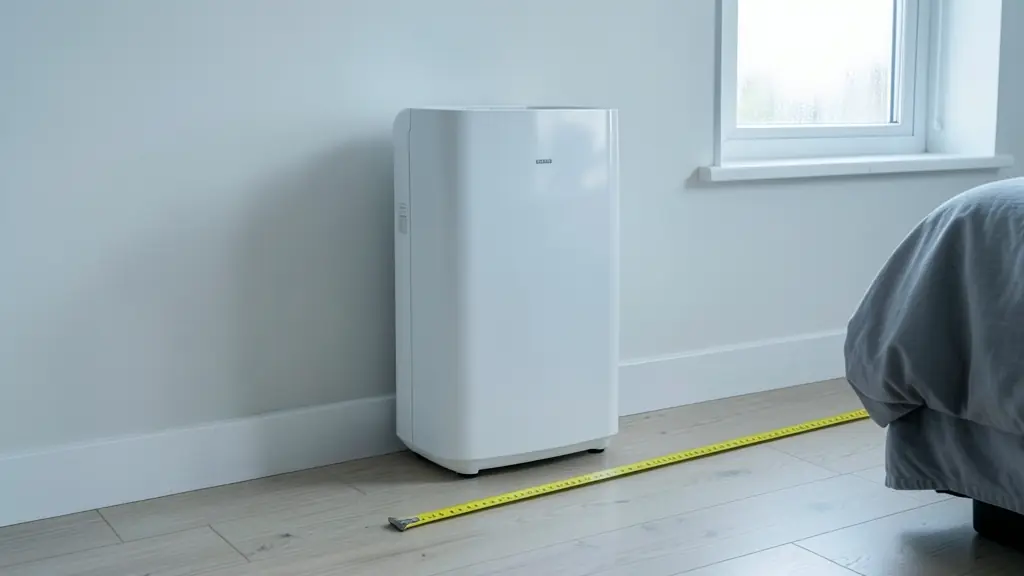
Dehumidifiers are sold by how much water they can pull out of the air in a day, in litres. Too small and it runs flat out without ever getting the room dry; much too big and you pay for capacity you never use. The size you need depends on the floor area, the ceiling height and how damp the space is, and the calculator below brings those together.
How the calculator sizes a unit
It uses the sizing chart that appliance makers in the United States published for decades (AHAM), which gives pints a day for rooms from about 46 m² to 232 m² at four levels of dampness. The calculator converts it to litres and square metres and fills in between the steps. Below the smallest size on the chart it stays at the smallest size, because even a small damp room needs a unit that can keep up with a shower or a pot on the stove.
The four levels are the ones on our quote form: slightly damp with a musty smell; very damp with condensation on the windows every morning; wet, with mould spreading on walls or ceilings; and drying out after a leak or a flood. A room drying out after a burst geyser needs far more than its size suggests, which is why restoration firms bring in larger units and air movers for a few days.
Check the test conditions before you compare
The litres a day on the box are measured in a test room that is warm and humid. Many units sold in South Africa are rated at 30°C and 80% relative humidity, and some at about 27°C and 60%. The same unit removes far less water in a bedroom at 15°C on a Cape winter night than its label says. So compare units at the same test conditions, and in a cool room choose the next size up.
Compressor units lose a lot of their capacity below about 15°C and can ice up their coils. In a cold garage, a boat, a holiday house left closed, or an unheated room in a Highveld winter, a desiccant dehumidifier keeps working. It uses more power but also warms the room a little. See desiccant dehumidifiers.
More than one room
A portable unit dries the room it is in, and a little of the rooms next to it if the doors stay open. For a whole flat, you can either put a unit in each problem room, or move one larger unit around, or, in a larger house or an office, ask an HVAC contractor about a ducted unit that dries the air through the existing ducts. The calculator gives a suggested size per room and the total for all of them. See ducted dehumidifiers.
Before you buy
- Find the cause first. A unit treats damp air; it does not fix a leaking gutter, a burst pipe in a wall or rising damp. See damp inspections.
- Check the tank size, or whether it can drain continuously through a hose into a sink or drain, if you want it to run unattended.
- Check the noise level in decibels if it will run in a bedroom at night, and the power draw if you run it on an inverter.
- A built-in humidistat stops the compressor when the room reaches the target, which saves power. Set it to about 50%.
Frequently asked questions
What size dehumidifier do I need for a bedroom?
Is a bigger dehumidifier better?
Does ceiling height matter?
Why does my dehumidifier collect less water in winter?
More calculators and guides
- Dew point and condensation calculatorWhen a window or wall will run wet, and the mould risk on it
- Relative and absolute humidity calculatorRelative to absolute humidity, and the water in a room's air
- Dehumidifier running cost calculatorkWh and rands a month at your tariff, and the load on an inverter
- Grow room VPD calculatorVapour pressure deficit and target humidity for each growth stage
- Ideal humidity levels guideTarget humidity for every kind of room, and a reading checker