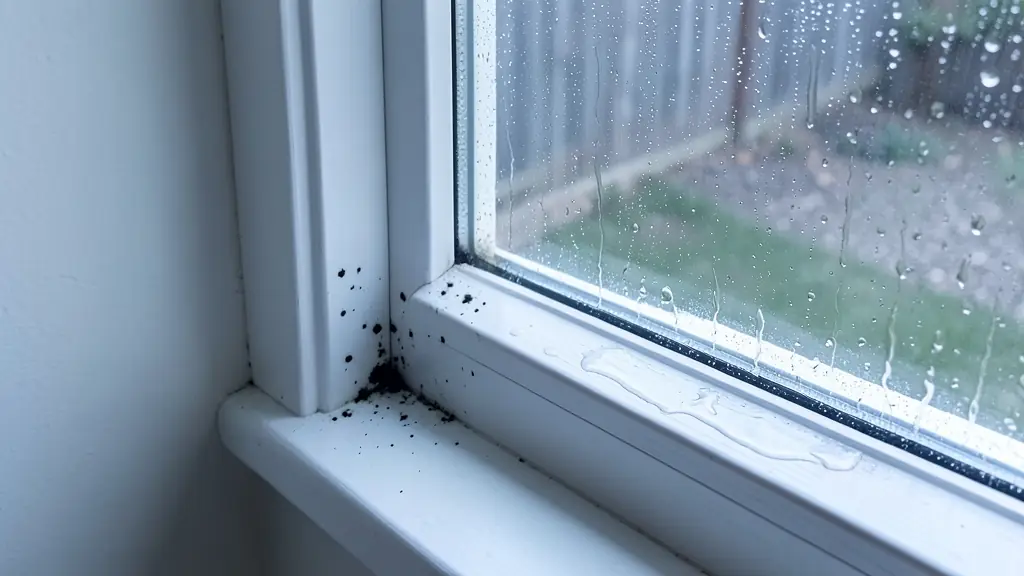
Condensation is the most common cause of mould in South African homes. Warm, damp air meets a cold window, an outside wall or a ceiling under a cold roof, cools down, and the water in it comes out on the surface. The temperature at which that happens is the dew point. This calculator works it out, and tells you how close a cold surface is to growing mould even before it looks wet.
How it works
Air at a given temperature can hold only so much water vapour. Relative humidity is how full it is, as a percentage. When air cools, it can hold less, so its relative humidity rises; at the dew point it reaches 100% and water condenses. The calculator uses the Magnus formula, a standard approximation that is accurate to a fraction of a degree in the range found in homes.
Next to a cold surface the air cools to the surface temperature, so the humidity right at the surface is higher than in the middle of the room. Mould does not need running water: building standards such as ISO 13788 design walls so that the humidity at the inside surface stays below 80% for most of the time, because above that, mould can grow on paint, plaster, silicone and fabric. So the calculator shows the humidity at the surface as well as whether it will condense.
Measuring the surface temperature
An infrared thermometer pointed at the wall or window gives the surface temperature in a second. A cheap probe thermometer taped to the wall for a few minutes also works. Measure the coldest spots: the corners of outside walls, behind wardrobes against an outside wall, the bottom of windows, the ceiling under a flat concrete roof, and steel window frames, which are often the coldest surface in older houses. Measure early in the morning in winter, when they are coldest.
If you don't have a thermometer, try 12°C for single glazing on a winter morning in the Western Cape or on the Highveld, and a few degrees below the room temperature for an outside wall in a closed cupboard.
What to do about it
There are two ways to stop condensation: make the air drier, or make the surface warmer. The calculator shows the highest room humidity that keeps that surface dry and the highest that keeps it below the 80% mould line.
- Drier air: extract fans in the bathroom and kitchen that run for a while after a shower or cooking, lids on pots, washing dried outside or in a tumble dryer that vents out, windows opened for a few minutes each morning, and a dehumidifier in rooms that stay damp.
- Warmer surfaces: furniture moved a hand's width off outside walls so air can reach them, ceiling insulation, curtains opened in the day, and even a little background heat on cold nights.
- Existing mould: clean it off small areas, or get a mould removal contractor for large areas, then repaint with anti-mould paint once the cause is fixed.
Frequently asked questions
What is a good dew point indoors?
Why do my windows run wet every winter morning?
Does a dehumidifier lower the dew point?
Is condensation the same as rising damp?
More calculators and guides
- Dehumidifier size calculatorLitres a day for a room from its size and how damp it is
- Relative and absolute humidity calculatorRelative to absolute humidity, and the water in a room's air
- Dehumidifier running cost calculatorkWh and rands a month at your tariff, and the load on an inverter
- Grow room VPD calculatorVapour pressure deficit and target humidity for each growth stage
- Ideal humidity levels guideTarget humidity for every kind of room, and a reading checker